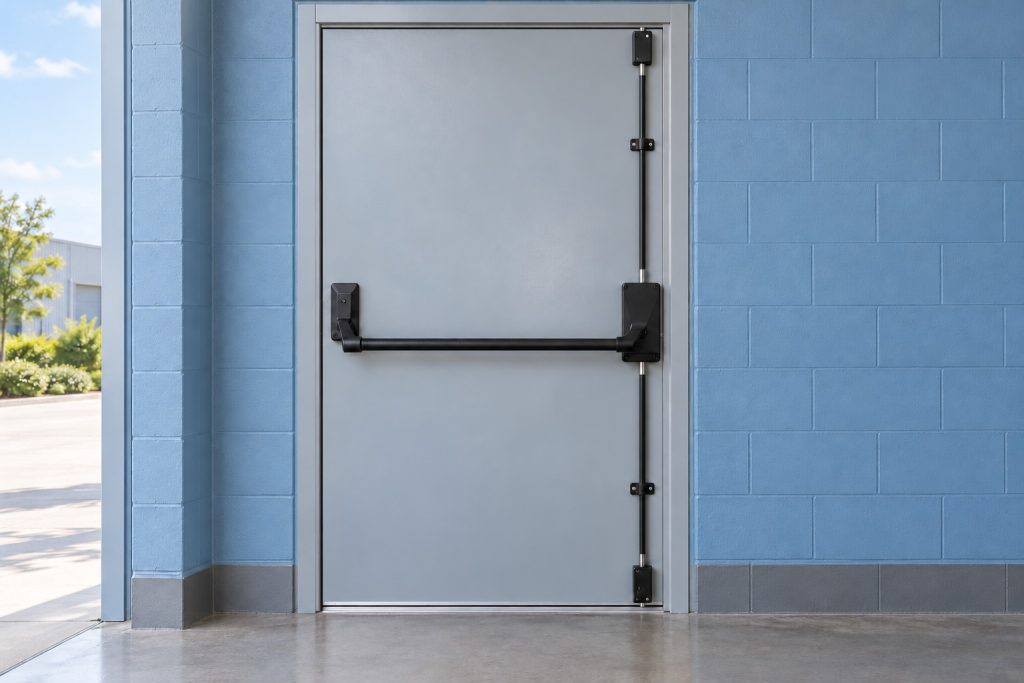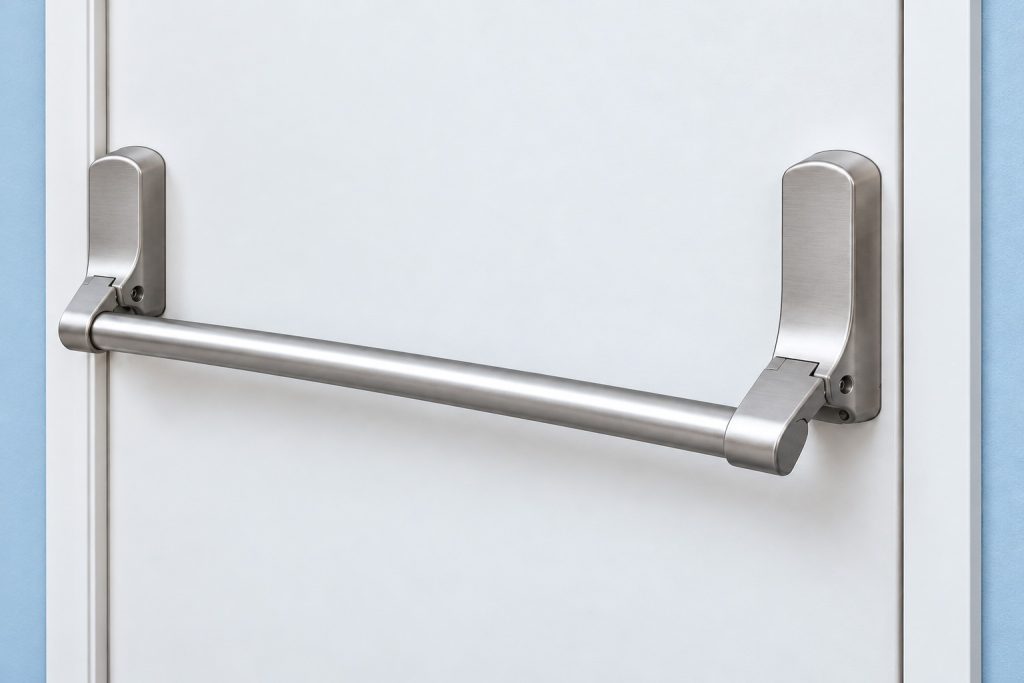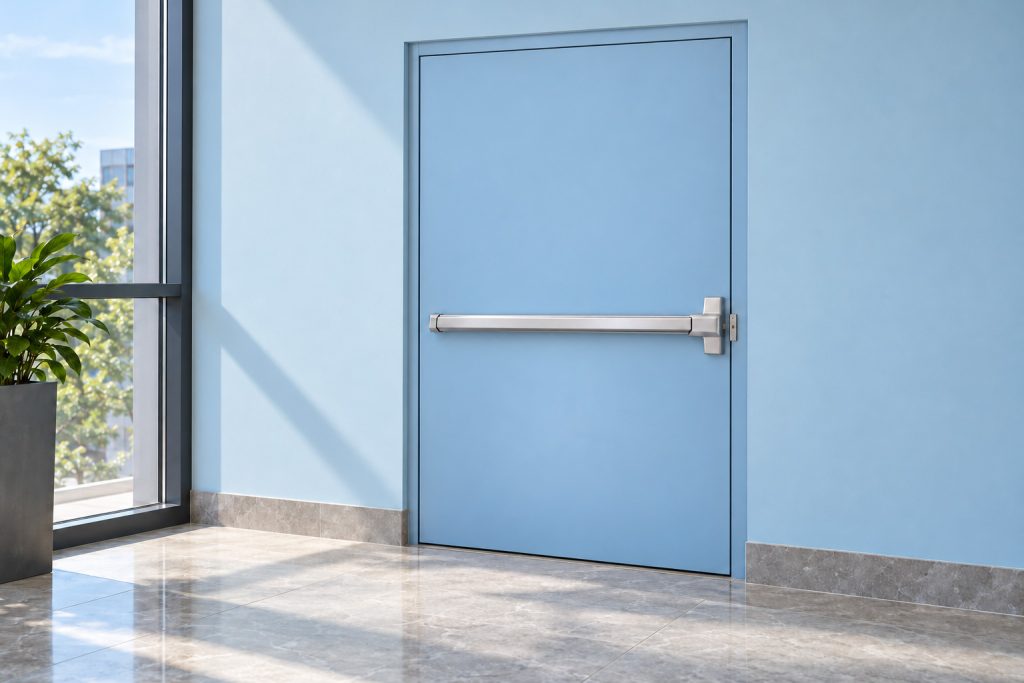
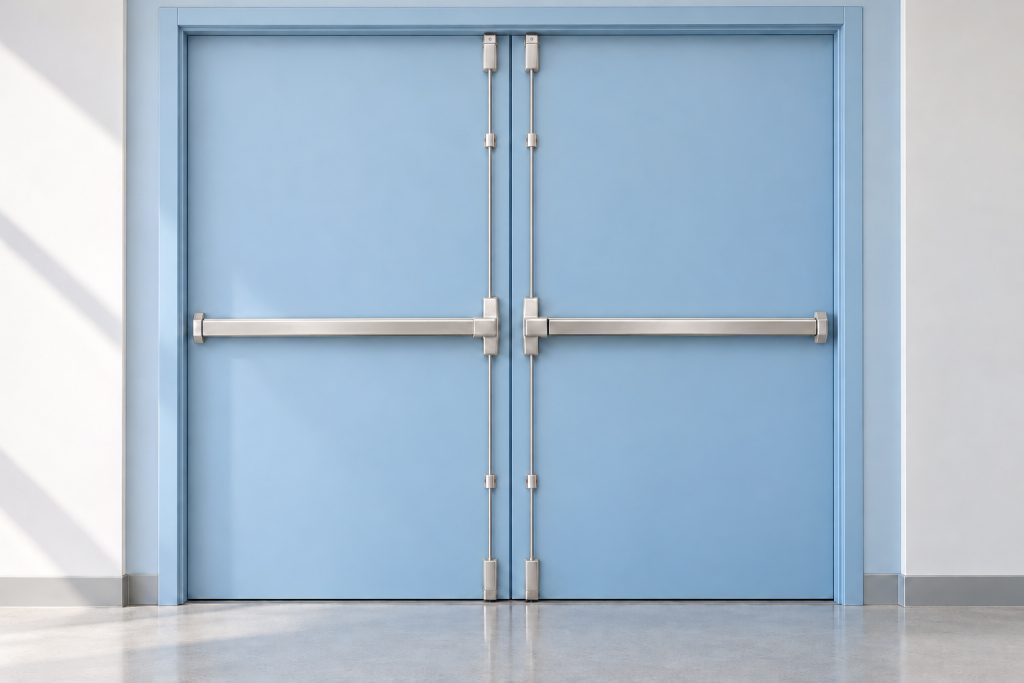
Panic exit devices provide a readily accessible means of releasing an exit door by pushing a horizontal operating element. They are intended for situations where occupants may need to leave quickly and may be unfamiliar with the building or its door hardware.
Al Amal Company offers panic exit hardware for appropriate single- and double-door applications, including touch-bar and crossbar configurations. Selection considers the door material, dimensions, handing, locking arrangement and any requirement for controlled entry from the outside.
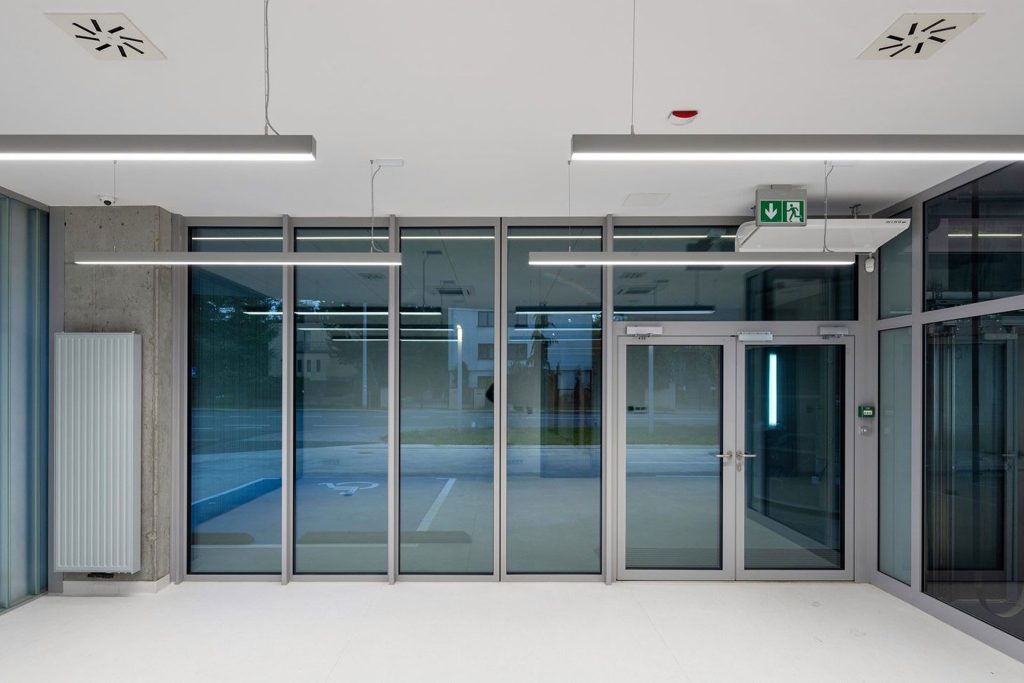
The device must work as part of the complete opening, alongside compatible hinges, strikes, closing devices and associated hardware. Where a fire-rated door is involved, the selected exit device must also be suitable for that tested door assembly. We support specification around the project’s applicable requirements, helping establish a coordinated solution for convenient everyday use and emergency egress.
Brand: KIWI

Controlled Access. Positive Latching. Immediate Release.
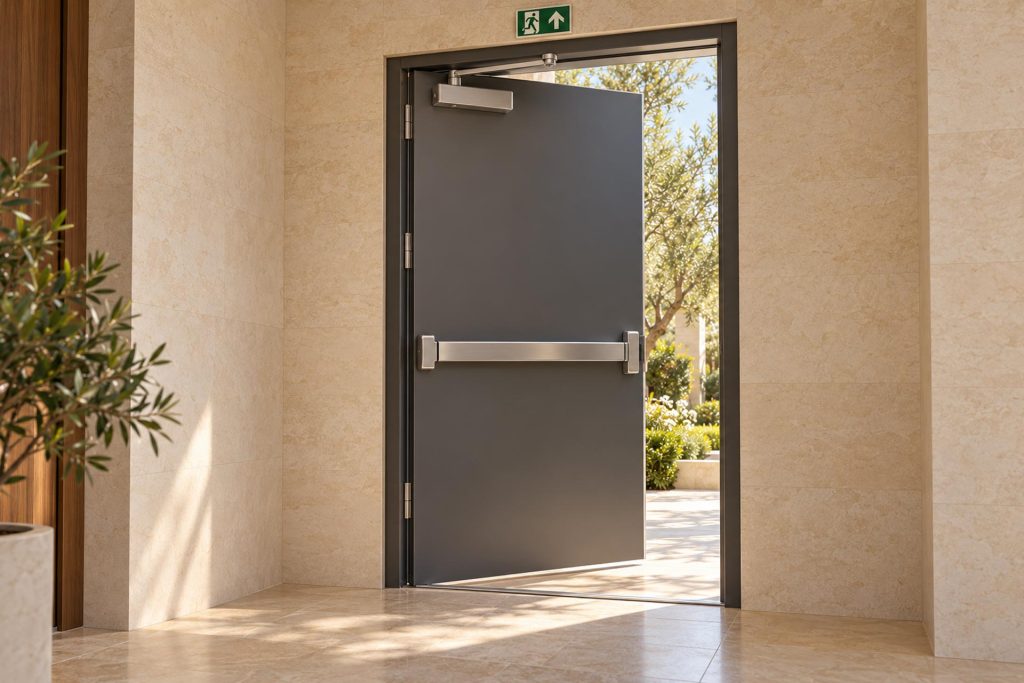
KIWI Architectural Hardware provides panic exit devices for commercial and industrial doors where reliable escape operation must work alongside controlled external access. Commonly specified as panic bars, crash bars or emergency exit push bars, these devices mechanically retract the latch or locking rods through pressure on a horizontal operating bar.
Locking Configurations for Different Door Assemblies
Rim exit devices have a surface-mounted latch mechanism that engages a frame-mounted strike. They suit single doors and compatible double-door arrangements, including installations using a centre mullion.
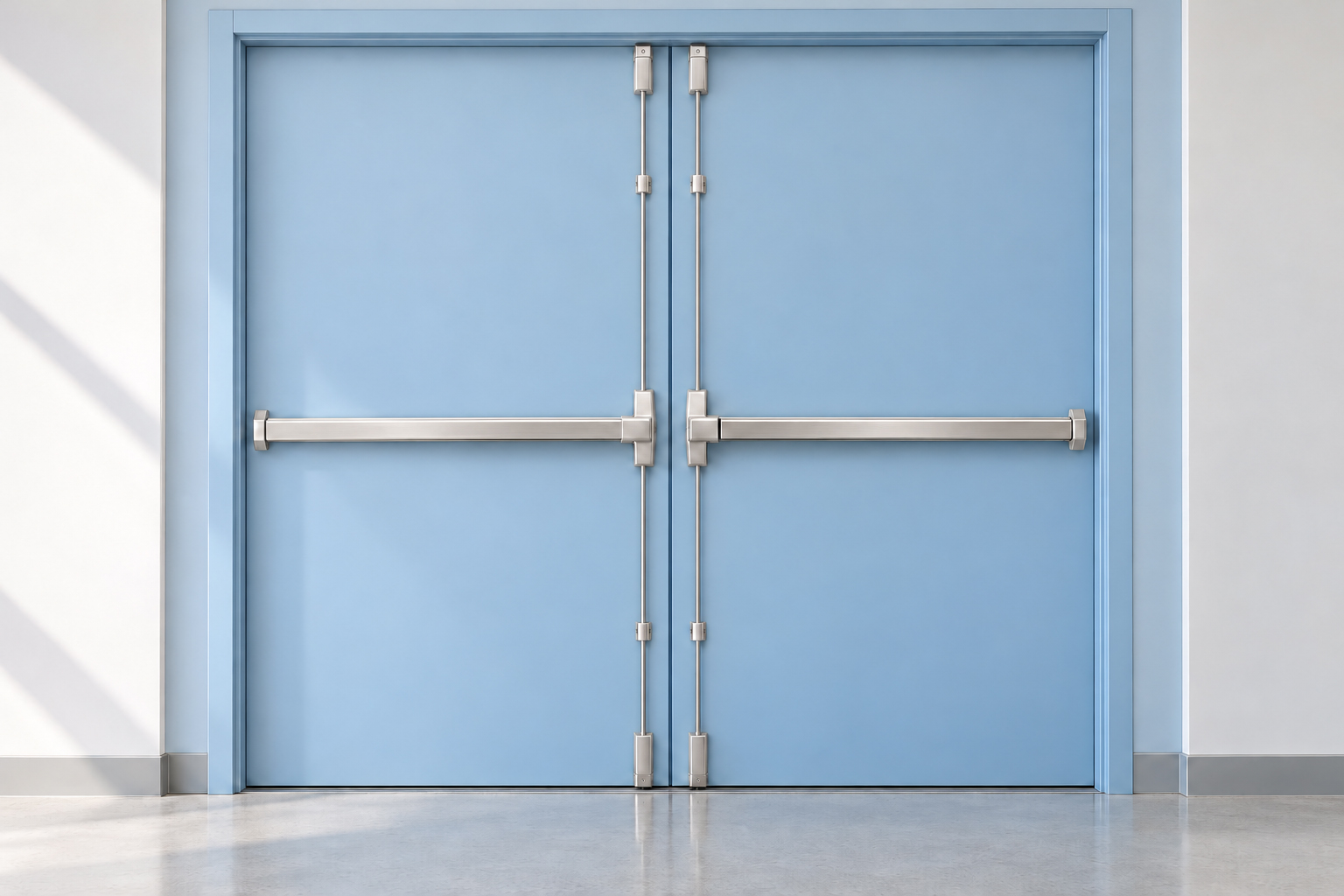
Surface vertical rod exit devices connect the operating mechanism to upper and lower latches through exposed rods. This arrangement provides two-point latching and is commonly specified for double exit doors.
Concealed vertical rod exit devices position the rods within the door leaf, providing a cleaner appearance while requiring compatible door construction and accurate preparation.
Mortise exit devices operate a lock case recessed into the door edge. Selection requires coordination of the lock pocket, backset, strike and outside trim.
Mechanical Operation and External Access
When the push bar is depressed, the mechanism releases the locking points so the door can open in the escape direction. Where fitted, an auxiliary dead-latching feature helps resist attempts to force the latch back while the door is closed.
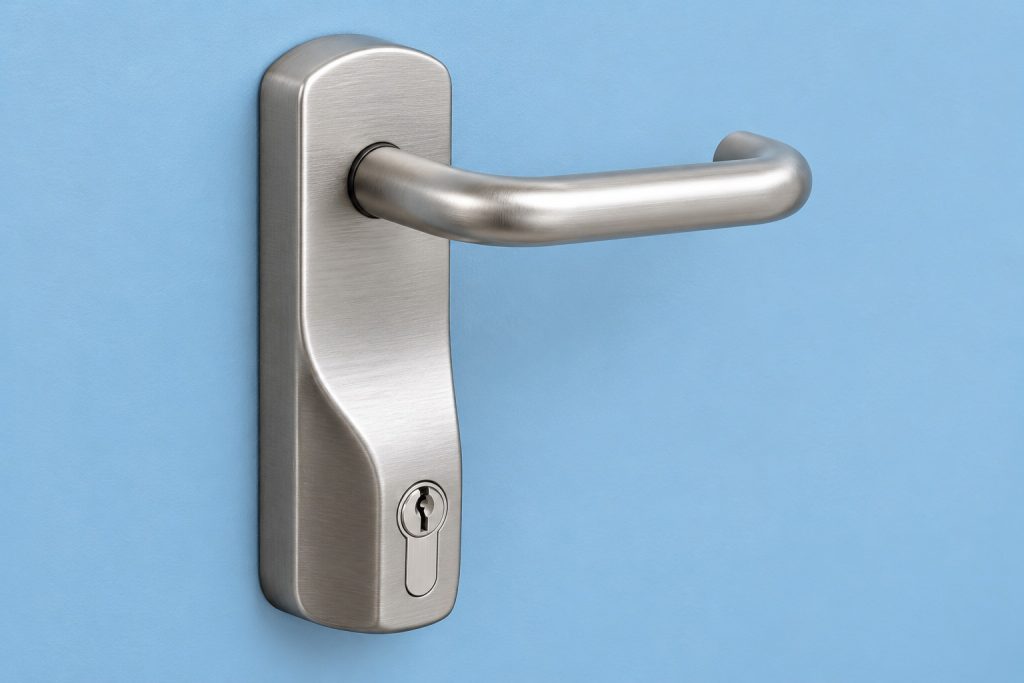
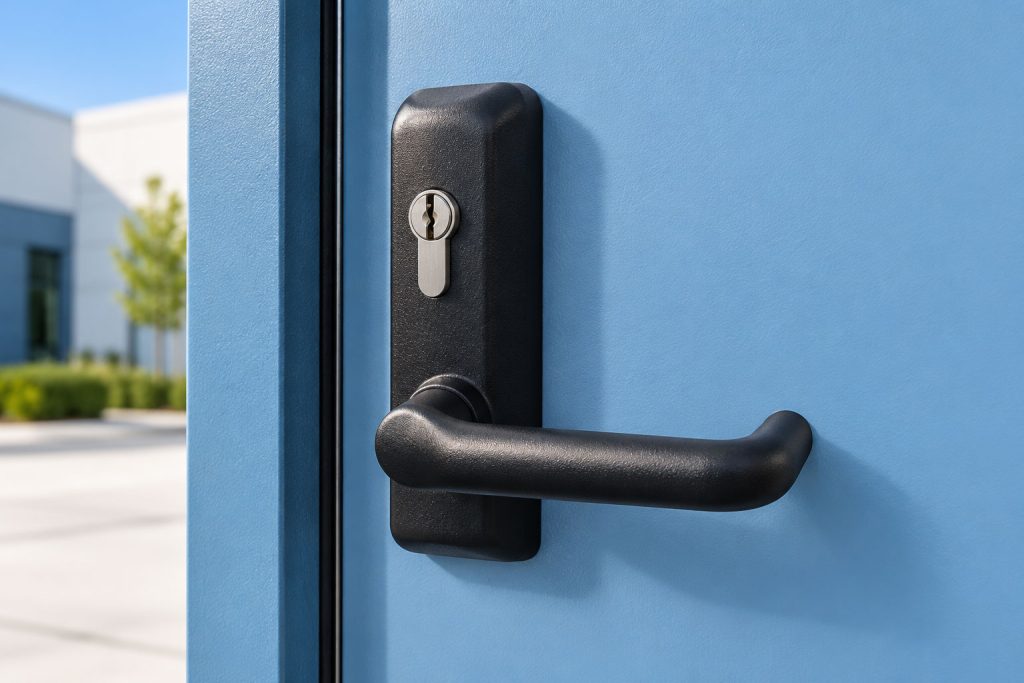
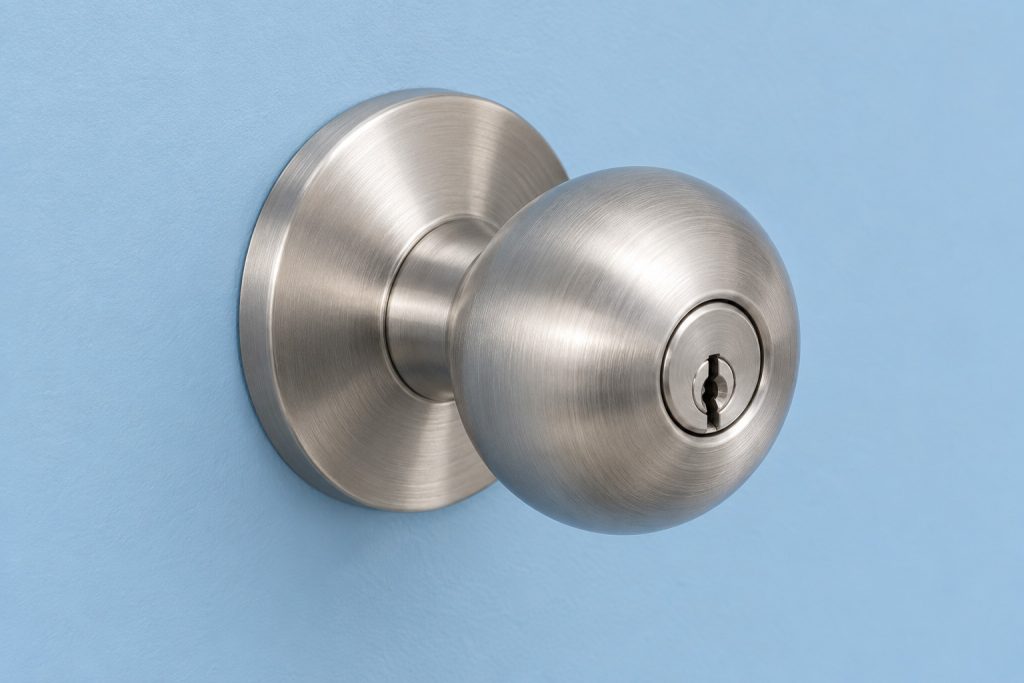
Compatible outside lever trims, pull handles and key cylinders determine external access. Depending on the selected function, the outside lever may remain locked, be unlocked by key or permit passage, while internal panic operation remains available.Mechanical dogging, available on suitable non-fire-rated devices, holds the latch retracted for frequent passage. Fire exit hardware requires positive latching and must not use mechanical dogging.
Electrified Hardware and Access Control
Where supported by the selected model, electric latch retraction enables an access control system to retract the latch remotely. Request-to-exit switches signal push-bar operation, while latch monitoring indicates latch status. These are distinct functions and should be specified separately.
Technical Specification and Certification
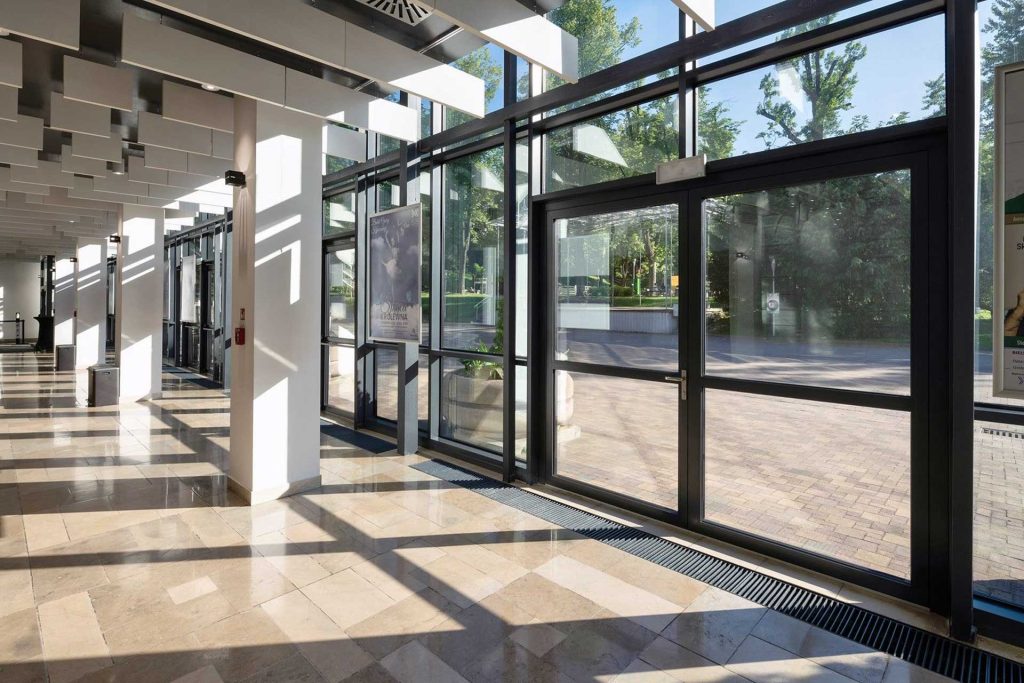
Selection should account for door width, thickness, material, handing, stile width, device projection, fixing reinforcement and strike compatibility. Double-door assemblies also require coordination of meeting stiles, mullions and closing sequence where applicable.
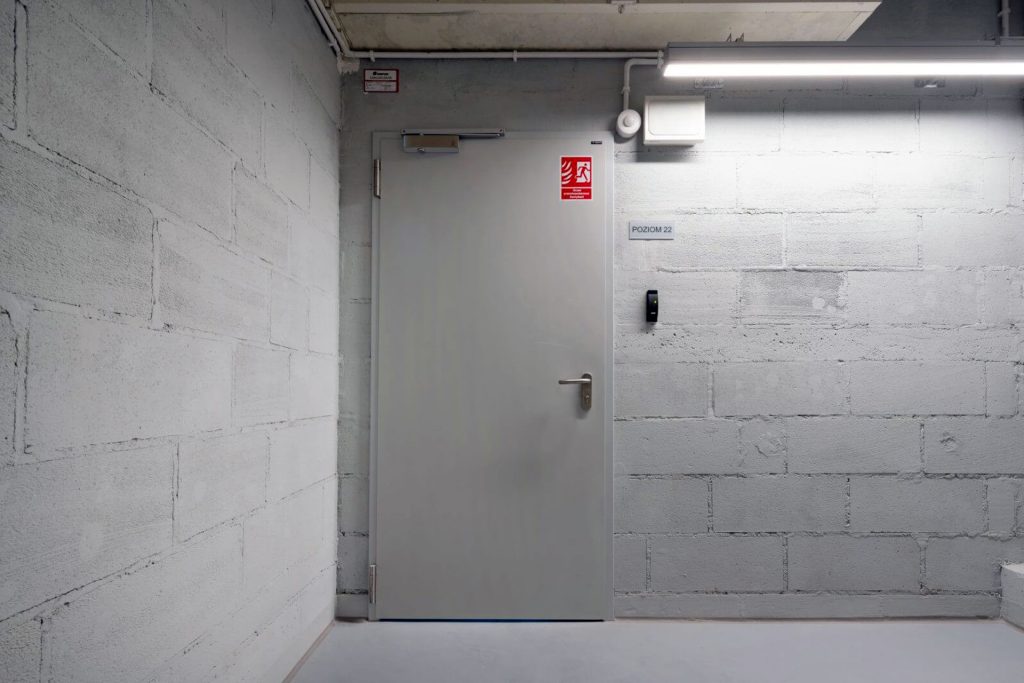
For demanding applications, specifications may call for ANSI/BHMA A156.3 Grade 1 performance and UL 305 panic hardware listing. Fire-rated openings additionally require appropriately listed fire exit hardware compatible with the complete door assembly; a panic listing alone does not establish a fire rating.
KIWI supports product selection against the required door configuration and documented model specifications.
For the complete range, kindly visit our “Product” section.